A French devis is more than a price estimate. For building and renovation work, it provides important information about the contractor, the work being proposed, the price, VAT, timing and applicable insurance. Once you accept the quote, it can become a legally binding contract.
Learn what to look for in a French devis, how to understand 20%, 10% and 5.5% TVA, what an acompte actually means, and how to spot vague or potentially problematic quotes before you sign.
A French Devis Can Become a Binding Contract
A devis is an offer made by the professional to carry out specified work for a stated price and under stated conditions.
Once you accept the devis, it becomes contractually binding on the parties. Your acceptance should therefore be treated as a significant commitment, rather than simply an indication that you would like the work carried out.
For building work, the quote should give you enough information to understand exactly what is included, what it will cost, when the work is expected to take place, and who is responsible for carrying it out.
Official French government (DGCCRF) guidance confirms that a devis becomes binding once it has been accepted.
Before you sign
Don't rely solely on the headline total.
Check the detailed description of the work, quantities, unit prices, materials, labour, VAT rate, payment terms, estimated start date and duration, and the contractor's legal and insurance information.
A cheap-looking quote can become considerably more expensive if important work has been left out or described too vaguely.
What Should a French Artisan's Devis Contain?
The exact mandatory information depends on the type of service and circumstances. For building and home-improvement work, however, a properly prepared devis should provide clear information about the parties, the work and its price.
Here are the key things to check.
1. The Date of the Devis and Its Validity
The devis should be dated and should state how long the offer remains valid.
For example:
Devis valable jusqu'au 30 septembre 2026.
This matters because material and labour prices can change. Once the stated validity period has expired, you should not assume that the original price is still available.
2. The Artisan's Legal Identity and Business Details
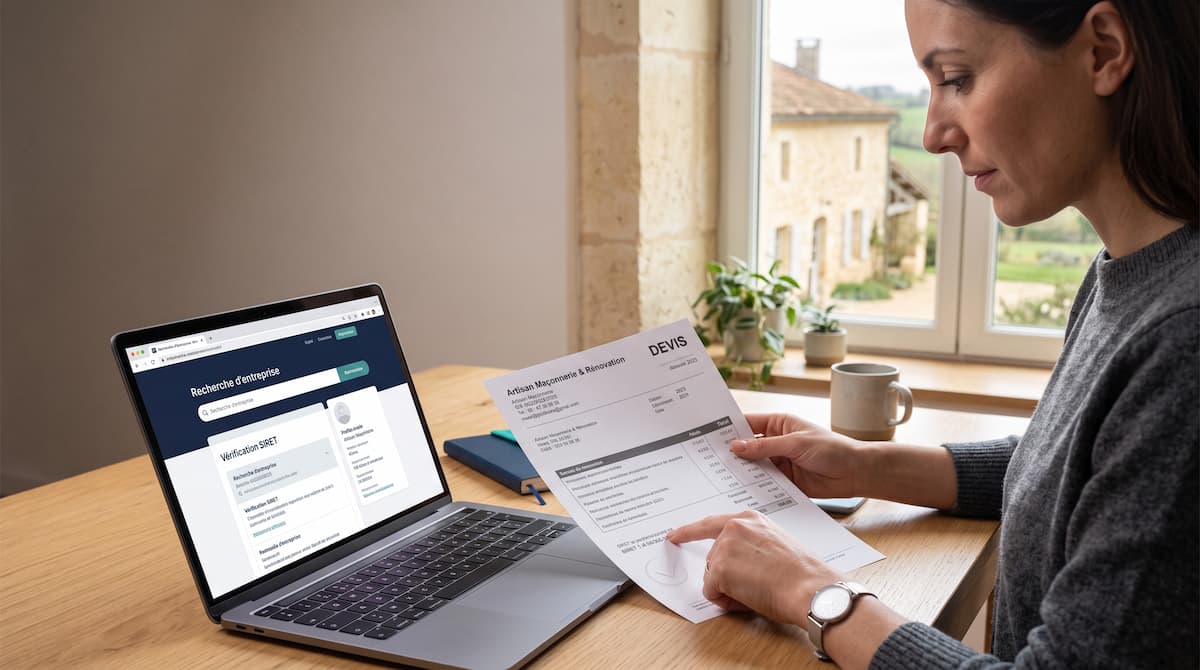
The quote should clearly identify the business providing the service, including its name and address and the relevant business identification information.
Look for the company's SIRET number and, where applicable, its registration information.
The SIRET is a 14-digit identifier for a particular establishment. You can independently check business registration information through the French government's business directories.
Don't treat the presence of a SIRET as proof that the business is trustworthy. A valid SIRET confirms an establishment's registration details; it does not, by itself, prove qualifications, insurance cover or the quality of previous work.
For more information, see our guide to checking a French artisan's SIRET.
3. Your Details and the Location of the Work
The devis should identify the customer and, for building work, the location where the work will be carried out.
This is particularly important when an artisan operates across several communes or departments.
Make sure the address on the quote corresponds to the actual property where the work is being performed.
4. A Detailed Description of the Work
This is one of the most important parts of the entire devis.
A professional quote should not simply say:
Rénovation toiture : 12 000 €
It should give you enough detail to understand what you are actually paying for.
Depending on the work, this might include:
- quantities and measurements
- materials and products
- labour
- unit prices
- number of hours or other applicable units
- removal and disposal of materials
- scaffolding or access equipment
- preparation and finishing work
- travel or delivery costs
- any exclusions or assumptions
French consumer guidance requires detailed information about the services and products involved, including quantities and unit prices where applicable.
Why this matters
A detailed quote makes it much easier to compare two artisans.
If one quote includes scaffolding, waste removal and finishing while another doesn't, comparing the headline totals alone can give you a completely misleading impression of which is cheaper.
5. Labour and Material Costs
The devis should make the pricing understandable.
Look for separate or clearly identifiable amounts for:
- Main d'œuvre : labour
- Fournitures : materials and supplies
- Frais de déplacement : travel costs, where applicable
The quote should ultimately show the total price HT (hors taxes) and TTC (toutes taxes comprises), together with the applicable VAT rate.
The TVA Rate: 20%, 10% or 5.5%?
French renovation quotes can contain different rates of TVA (VAT), and this is an area where homeowners should pay close attention.
The standard rate is generally 20%, but certain work carried out on eligible residential properties can qualify for reduced rates.
Depending on the nature of the work and the conditions that apply, you may encounter:
20% TVA
This is the standard VAT rate and can apply to work that does not qualify for a reduced rate.
10% TVA
A reduced rate can apply to certain improvement, alteration, transformation and maintenance work on qualifying residential premises.
5.5% TVA
The 5.5% rate can apply to certain energy-efficiency improvement work that meets the relevant requirements.
Don't assume that choosing a renovation project automatically gives you a reduced VAT rate. Eligibility depends on the property, the nature of the work and the applicable conditions.
Your devis should clearly show the VAT rate being applied to the relevant work.
If different VAT rates apply to different parts of a project, they should be identifiable rather than hidden within one unexplained total.
Start Date and Estimated Duration
For building work, check that the devis provides information about when the work is expected to begin and how long it should take.
For example:
Début des travaux : octobre 2026
Durée estimée : 4 semaines
This becomes particularly important when coordinating several trades.
A roofing project that is delayed by several weeks can, for example, affect plastering, electrical work, plumbing and interior finishing.
French government guidance specifically identifies the start date and duration of work among the information to be provided on a building-related devis.
Deposits and Payment Terms: Understanding an Acompte
You may see terms such as:
- Acompte : a payment that represents a firm commitment from both parties
- Arrhes : a payment with different legal consequences, including specific withdrawal rules
- Solde : the remaining balance
An acompte is not simply a casual deposit.
If you are asked to pay an acompte, make sure the quote clearly states:
- how much is required
- when it must be paid
- what percentage of the total it represents
- what subsequent payments are due
- when the final balance is payable
Don't assume that a particular percentage (such as 30%, 40% or 50%) is automatically required by French law. Payment arrangements can depend on the contract and the circumstances.
Before paying a substantial acompte, make sure you have independently checked the contractor's identity, registration and appropriate insurance.
Don't Confuse a Detailed Devis With a Good Devis
A quote can contain plenty of numbers and still leave important questions unanswered.
Be cautious if you see descriptions such as:
Travaux de maçonnerie : forfait 15 000 €
without an explanation of what the forfait actually includes.
Ask:
- What exactly will be done?
- Which materials are included?
- What quantities are included?
- Is waste removal included?
- Is scaffolding included?
- Are finishes included?
- What is specifically excluded?
- What happens if additional work is discovered?
- Is the price fixed or can it be revised?
The more complex the project, the more important this becomes.
Check the Décennale Insurance Information
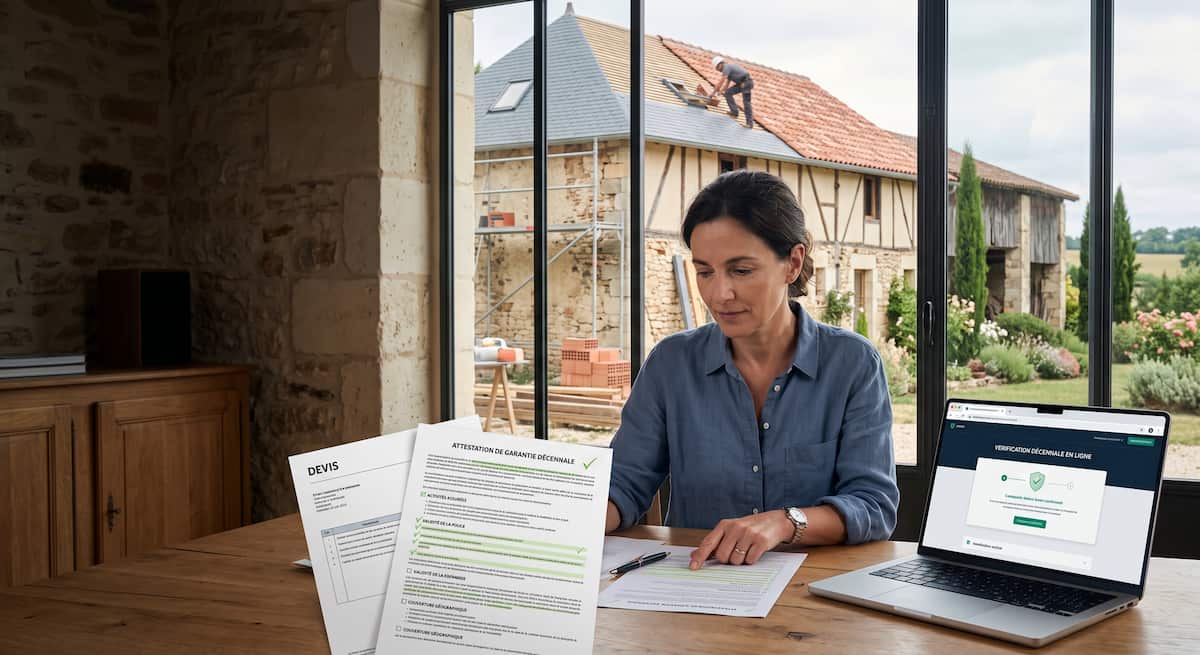
For work falling within the contractor's statutory ten-year liability, the contractor's appropriate insurance information is particularly important.
French law requires professionals whose ten-year liability may be engaged to have the relevant insurance, and insurance information must appear on certain contractual documents, including devis and invoices.
Don't simply look for the word "Décennale".
Check that the insurance documentation corresponds to:
- the correct legal entity
- the contractor performing the work
- the relevant activities
- the policy period
- the work being proposed
A SIRET check and an insurance check are two different checks. One does not replace the other.
For a detailed explanation, see our guide to Garantie Décennale in France.
What About RCS and RM Numbers?
Older information about French artisans often refers to registration with the RCS (Registre du commerce et des sociétés) or RM (Répertoire des métiers).
The French business-registration system has changed, with businesses now recorded through the Registre national des entreprises (RNE).
For this reason, don't assume that the absence of an old-style RM number from a quote automatically means something is wrong.
What matters is that the business can be identified and its registration can be checked against the current French business registers.
5 Red Flags to Look for Before Signing
- 🚩 The work is described too vaguely: A single line such as “rénovation complète : 25 000 €” doesn't give you enough information to understand what you're buying.
- 🚩 The VAT rate isn't explained: If the quote simply gives you a TTC total without making the applicable TVA clear, ask the artisan to explain it.
- 🚩 Large exclusions are hidden in the small print: Check what isn't included just as carefully as what is included.
- 🚩 The insurance doesn't match the work: A contractor's insurance should be appropriate to the activities being undertaken. Don't assume that having a Décennale certificate means every type of work is automatically covered.
- 🚩 You're being pressured to sign immediately: A legitimate contractor should be able to explain the quote and give you an opportunity to understand what you are agreeing to.
A Simple French Devis Checklist
Before signing, check:
- Date and validity period
- Artisan/company name and address
- SIRET and registration information
- Your name and property address
- Detailed description of the work
- Materials and quantities
- Labour costs
- Travel or other additional charges
- HT total
- Applicable TVA rate(s)
- TTC total
- Expected start date
- Estimated duration
- Payment schedule and any acompte
- Appropriate insurance information
- Clear exclusions and assumptions
- Terms covering any additional work
If anything is unclear, ask for the devis to be amended before signing.
The Bottom Line
A French devis should allow you to answer three basic questions before you commit:
- Who am I hiring?
- Exactly what am I paying for?
- What are the terms under which the work will be carried out?
Don't judge a quote by its final price alone. Check the detail behind the number, verify the business independently, confirm the applicable VAT rate, and make sure the contractor's insurance is appropriate for the work.
A clear devis protects both sides because it establishes what has actually been agreed.
At VeriLocal, we're building our verification process around exactly this kind of due diligence: helping homeowners find businesses whose identity, registration and relevant credentials can be checked before they commit to a project.
Tell us what you need. We will find suitable local businesses.
Do not risk hiring unverified contractors. Describe your project once and receive matched introductions to up to 3 verified local businesses with checked SIRET registrations and active Décennale insurance.