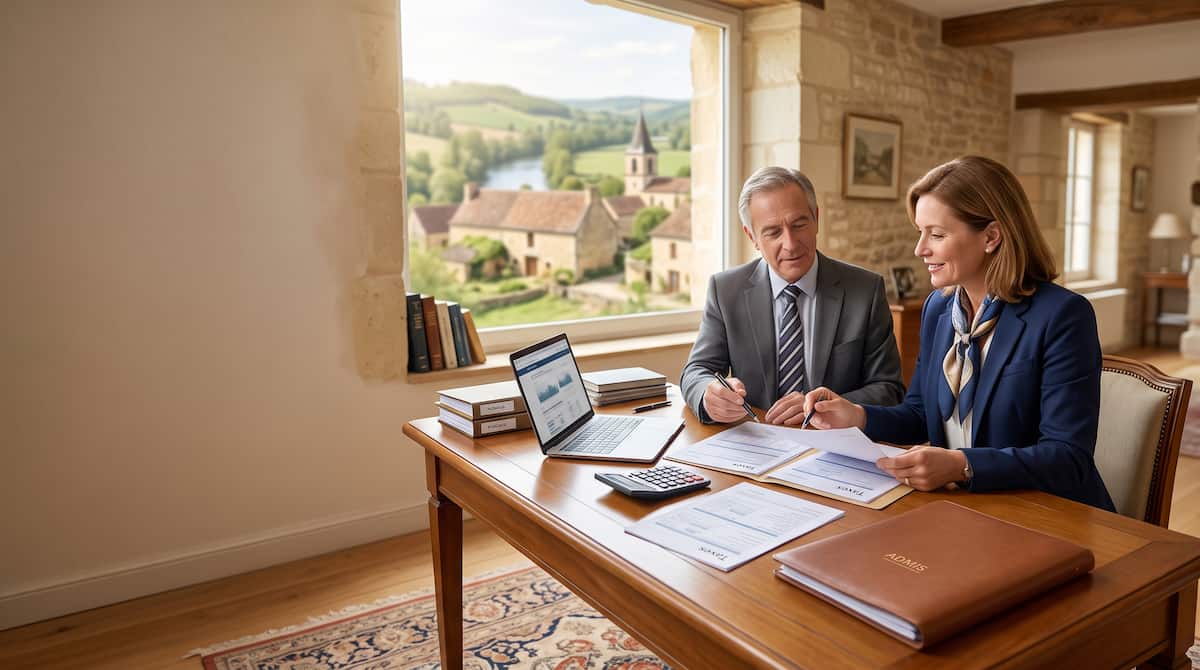

The Core Question Every Profile Must Answer
When a homeowner in Southwest France opens your business listing, they are not looking for marketing slogans or generic sales promises. They are trying to answer one specific question before contacting you:
"Can I trust this business with my property, my budget, and my timeline without exposing myself to legal, financial, or craftsmanship risks?"
In rural departments like Dordogne, Lot-et-Garonne, and Gironde, hiring a professional involves high stakes. Property owners are frequently managing older stone farmhouses, complex rural sanitation systems, historic roofs, or cross-border tax affairs. A substantial proportion of residents are international owners navigating French bureaucracy for the first time, while local French homeowners have grown wary of unqualified contractors and phantom companies.
Research across regional directories and customer enquiries shows that homeowners evaluate a local business listing through a mental checklist of verifiable facts. When these facts are missing, incomplete, or ambiguous, customers do not call to ask for clarification: they simply click back and contact the next business on the list.
This guide details exactly what customers look for on a local business profile, why each element matters, and how you can structure your information to maximise enquiries and attract serious, well-matched projects.
1. Verifiable Administrative Baseline: SIRET, Legal Identity, and Registration
The single most critical element on any French business profile is an authentic, verifiable administrative identity. In France, operating an unregistered commercial activity or failing to disclose required legal information is illegal under the French Consumer Code (Code de la consommation, articles L111-1 and L111-2).
Customers who have done even basic research will look for your 14-digit SIRET number before reading your biography.
What Homeowners Specifically Check:
- The 14-Digit SIRET Number: This number proves that your business is registered with the French National Business Register (INPI / RNE) and the official INSEE SIRENE directory.
- Matching Legal Name: The name on your profile must correspond directly to the legal entity or trade name registered with the Chambre de Métiers et de l'Artisanat (CMA) for artisans or the Chambre de Commerce et d'Industrie (CCI) for commercial businesses.
- Legal Structure: Customers want to know if you trade as an Entreprise Individuelle (EI / micro-entreprise), an EURL, an SARL, or an SAS. While all legal forms are valid, transparency establishes accountability.
- Active Trading Status: Savvy homeowners verify that the business is actively registered and has not been placed into judicial liquidation or administrative strike-off.
How to Present This on Your Profile:
- State your SIRET number prominently in the designated credential field.
- Ensure your registered business address matches the commune where your enterprise is officially domiciled.
- Avoid using vague phrases such as "registration pending" or "registered in the UK" for work carried out physically on French properties. Under French law, work performed on French soil must be covered by a compliant French legal structure or a registered European posting (détachement).
For a step-by-step guide to checking a French business's SIRET, see our guide on How to Check a French SIRET Number.
2. Insurance Transparency: Décennale vs RC Pro
Insurance is the primary risk-mitigation factor for property owners in France. The French Insurance Code (Code des assurances, article L241-1) mandates that any building professional undertaking structural work must hold a valid 10-year decennial guarantee (Assurance Responsabilité Civile Décennale). For service professionals, consultants, and non-structural trades, Professional Civil Liability (Responsabilité Civile Professionnelle or RC Pro) is the relevant coverage.
One of the quickest ways to lose credibility on a profile is either failing to mention insurance or claiming the wrong type of insurance. For example, a bookkeeping or translation business claiming to hold a "Verified Décennale" creates immediate confusion, while a roofer or mason failing to provide an insurance policy reference triggers alarm bells.
What Customers Look For:
- The Name of Your Insurance Company: Established insurers recognised in France (such as AXA, SMABTP, MAAF, Allianz, Generali, or Hiscox) provide immediate reassurance.
- The Policy Reference Number: Legitimate tradespeople include their policy number on their estimates (devis) and welcome verification.
- The Scope of Covered Activities: Insurance certificates specify the exact trade activities covered. Homeowners often ask: is this builder insured specifically for roofing, structural masonry, plumbing, or earthworks?
- Policy Validity Dates: An insurance attestation must be valid at the date the work commences.
Best Practice for Profiles:
- Clearly separate your decennial insurance (if undertaking building trades) from your general public liability (RC Pro).
- Note on your profile that valid insurance certificates are provided systematically alongside all written quotes.
- For comprehensive information on how decennial policies operate and what customers check, consult our in-depth guide to Garantie Décennale in France: What Property Owners Actually Need to Check.
3. Geographic Boundaries: Commune, Service Radius, and Travel Charges
In Southwest France, distance is a defining logistical factor. The departments of Dordogne (24), Lot-et-Garonne (47), and Gironde (33) span thousands of square kilometres of rural roads, river valleys, and dispersed hamlets.
One of the most frequent customer complaints on generic directories is contacting a tradesperson only to be told: "You are too far away for us to travel." Conversely, profiles that claim to cover "All of France" or "The entire Southwest" are viewed with skepticism. Experienced property owners know that an artisan based in Périgueux cannot economically take on a minor plumbing job in Eymet or Marmande without charging substantial travel costs.
What Customers Need to See:
- Your Base Commune: Clearly declare the town or village where your business is physically headquartered.
- Your Practical Service Radius: State your typical travel radius in kilometres (for example, 30 km, 45 km, or 60 km from your base).
- Primary Working Zones: Name the specific surrounding communes, cantons, or valleys you visit on a regular basis (for example: "Covering Bergerac, Eymet, Sigoulès, and surrounding communes within 35 km").
- Travel Charge Policy: If travel charges apply beyond a certain distance, state this openly (e.g. "Free travel within 25 km; travel surcharge applies beyond 25 km").
Setting realistic geographic boundaries saves you hours of unpaid telephone calls and ensures that incoming quote enquiries come from properties you can genuinely service efficiently.
4. Scope of Work: Defined Specialisations Outperform "All Trades"
Customers seeking quality work actively avoid vague, generic profiles. Listings that simply claim "All building work, all repairs, all gardening, and maintenance" often struggle to convert high-value clients. Homeowners know that a specialist in traditional lime mortar restoration is rarely the ideal candidate for complex heat pump installations, and vice versa.
A high-converting profile defines clear specialisations, detailing both what the business excels at and what it declines to take on.
Core Trade Categories and Customer Priorities:
- Building & Renovation Services: Customers look for specific restoration techniques, such as traditional lime pointing (joints à la chaux), stone masonry (moellons), structural carpentry, insulation retrofits, or interior plastering.
- Plumbing & Heating Services: Customers need to know whether you work on oil boilers, wood pellet stoves (poêles à granulés), thermodynamic water heaters, air-to-water heat pumps, or rural septic drainage connections.
- Electrical & Solar Services: Property owners check for Consuel compliance experience, consumer unit upgrades, 3-phase balancing (triphasé), and photovoltaic installations.
- Legal & Accountancy Services: Clients look for micro-entreprise declarations, French tax filing compliance, gîte accounting, and cross-border commercial setup.
The Power of Negative Scope:
State clearly what services you do not provide. For example:
- "We specialise in stone barn conversions and traditional roof overhauls. We do not take on modern blockwork new-builds or small drywall repairs."
- "We manage annual accounting and tax returns for small French businesses and gîtes. We do not provide UK personal tax advice."
Defining what you do not do instantly enhances credibility for the services you do promote.
5. Language Fluency and Communication Expectations
Southwest France is home to a unique mix of French residents, British and Irish expatriates, Dutch property owners, and international holiday home investors. Clear communication is the single greatest barrier or advantage in client relationships.
For English-speaking homeowners, hiring a tradesperson who can explain technical building choices, planning permissions, and contract terms in plain English removes enormous stress. For French homeowners, hiring an expat-led business that demonstrates fluent technical French and total respect for French building norms (normes DTU) creates immediate confidence.
What to Include Regarding Languages:
- Spoken and Written Fluency: Be completely candid about your language capabilities. If you speak native English and conversational French, say so. If your team is fully bilingual and handles French administrative paperwork and Mairie planning discussions seamlessly, highlight this as a core strength.
- Quoting Language: State whether your written estimates (devis) and invoices (factures) can be annotated or explained in English alongside the mandatory French legal text.
- Expected Response Times: State how quickly you typically respond to initial enquiries (e.g., "Enquiries answered within 24 to 48 business hours"). Managing expectations upfront prevents frustration.
6. Real Proof of Work: Local Photographs With Context
Stock imagery is the quickest way to destroy trust on a local business profile. Homeowners across Dordogne and Lot-et-Garonne know what authentic local architecture looks like: limestone rubble walls, Périgourdine hipped roofs, Roman terracotta tiles (tuiles canal), and traditional oak lintels. A profile displaying generic, pristine suburban American houses or stock photography from another country looks disconnected and suspicious.
How to Showcase Authentic Work:
- Show Real Local Projects: Upload clear, well-lit photographs of actual chantiers completed in the region.
- Include Contextual Captions: Rather than writing "Kitchen renovation", write: "Full kitchen overhaul in a 19th-century stone barn near Monpazier, incorporating exposed oak beams and custom electrical ring main."
- Document Before-and-After Sequences: Before-and-after photographs demonstrate problem-solving capability, craftsmanship, and tidiness on site.
- Highlight Challenging Details: Show close-ups of complex lead flashing, lime-washed walls, perfectly aligned consumer units, or neatly routed copper pipework. High-quality details speak directly to discerning clients.
7. Authentic Customer Reviews and Verified Evidence
Online reviews have suffered an industry-wide crisis of credibility. Anonymous star ratings with one-sentence comments like "Great service!" carry little weight with homeowners planning a twenty-thousand-euro roof replacement or a full property rewiring.
Customers look for evidence of authentic past client relationships:
- Specific Project References: Reviews that mention the specific commune, the nature of the project, and the timeline are vastly more convincing than generic praise.
- Evidence of Reliability: Homeowners prioritise reliability above all else. Reviews that confirm you turned up on the agreed date, communicated proactively when delays occurred, and left the site clean and tidy carry immense weight.
- Verified Reviews: Profiles that feature transaction-verified reviews (where customer invoices or project declarations have been audited by an independent directory) convert at substantially higher rates than unverified testimonials.
If you have completed successful projects for local homeowners, invite them to leave a detailed review detailing the scope of work, location, and communication experience.
8. Transparent Quoting Process and Next Steps
Many homeowners hesitate to contact a business because they do not know what will happen next. Will they be pressured into an immediate contract? Will they be charged an unexpected fee for a quote? Will the quote take two months to arrive?
Eliminating this ambiguity on your profile removes the final point of friction before an enquiry is submitted.
Clarify Your Quoting Process:
- Site Visits (Visite Préalable): State whether your initial site assessment is free of charge within your normal operating radius.
- Quote Turnaround Time: Give a realistic timeframe for preparing a formal quote (e.g., "Detailed devis provided within 5 to 7 working days following site inspection").
- Validity of Quotes: Mention that all quotes are valid for a specific duration (typically 30 or 60 days) to protect both parties against material price fluctuations.
- Legal Compliance: Note that your quotes comply fully with French commercial law, including breakdown of labour versus materials, VAT rates (e.g. standard 20% vs reduced 10% or 5.5% for qualifying energy renovations), and statutory cooling-off periods (droit de rétractation).
For an exhaustive guide on legal quote requirements, direct customers to our resource on Understanding a French Devis: What Must Be Included in an Artisan's Quote by Law.
9. Summary: The 10-Point Business Profile Audit
Before publishing or updating your local listing, review your profile against this 10-point checklist:
| Checkpoint | Requirement | Why It Matters |
|---|---|---|
| 1. SIRET Number | Valid 14-digit number on file | Legal compliance; proves registered business status. |
| 2. Legal Name | Matches INSEE / INPI registration | Eliminates suspicion of unregistered trading. |
| 3. Insurance Details | Named insurer and policy reference | Mitigates major structural and liability risks. |
| 4. Correct Insurance Type | Décennale for building; RC Pro for services | Shows professionalism and understanding of regulations. |
| 5. Headquarters Commune | Physical town or village stated | Establishes genuine local territorial presence. |
| 6. Operating Radius | Defined kilometre radius (e.g. 35 km) | Filters out unprofitable, distant enquiries. |
| 7. Defined Specialisms | Specific trades and negative scope | Attracts high-value, suitable projects. |
| 8. Real Project Photos | Authentic regional chantiers | Proves actual experience with local property types. |
| 9. Language Capabilities | Honest appraisal of English and French | Sets clear, realistic communication expectations. |
| 10. Quoting Protocol | Free site visits, timeframe for devis | Removes friction and encourages direct enquiries. |
Next Steps for Local Businesses in Southwest France
Creating and managing an accurate, fact-based business profile is the most effective way to build sustainable local demand without paying exorbitant commission fees or buying unverified advertising badges.
If you operate a registered trade or professional service in Dordogne, Lot-et-Garonne, or Gironde:
- Create your free VeriLocal profile today to get discovered by homeowners actively seeking your exact expertise.
- Keep your credentials updated whenever you renew your annual insurance policies or complete notable projects.
- Review our regional guides to understand the legal and technical questions your customers are asking before they hire.
Regulatory Sources and Editorial Standards
- Primary Legal References: Code de la consommation (articles L111-1, L111-2, L221-5); Code des assurances (article L241-1); Loi n° 2014-626 du 18 juin 2014 (Loi Pinel mandatory insurance mentions).
- Official Registry Data: INSEE SIRENE directory (Institut national de la statistique et des études économiques) and the French National Business Register (Registre National des Entreprises / INPI).
- Author: Simon Palmer, Founder, VeriLocal
- Editorial Review: Regional Trade Advisory Board
- Last Verified Date: October 2026 (Scheduled quarterly review: Q1 2027)
Tell us what you need. We will find suitable local businesses.
Do not risk hiring unverified contractors. Describe your project once and receive matched introductions to up to 3 verified local businesses with checked SIRET registrations and active Décennale insurance.