How international property owners in Dordogne, Lot-et-Garonne, Gironde and neighbouring departments can find English-speaking artisans, communicate clearly about renovation projects, manage work remotely and carry out sensible checks before hiring.
Managing a French Property Renovation From Abroad
Owning a property in Southwest France can be very different from living there full-time.
You may be trying to organise a roof repair from another country, coordinate several trades while working remotely, or simply understand what an artisan is telling you about a problem with your property.
The language barrier can make an already complicated project considerably harder.
Construction terminology is particularly challenging. Everyday French may be enough to order lunch or speak to a neighbour, but understanding the difference between charpente, couverture, maçonnerie, étanchéité and isolation is another matter entirely.
Then there is the paperwork.
A renovation project may involve a devis, acompte, invoices, planning requirements, insurance certificates and technical specifications: all of which need to be understood before you commit to the work.
For international property owners, finding an artisan who can communicate comfortably in English can therefore be a major advantage.
Why Choose an English-Speaking or Bilingual Artisan?
A bilingual artisan isn't automatically a better contractor. Experience, workmanship, registration and appropriate insurance still matter.
However, being able to communicate clearly in English can remove one of the biggest practical risks in an international renovation project: misunderstanding what has actually been agreed.
1. Clearer Project Briefs
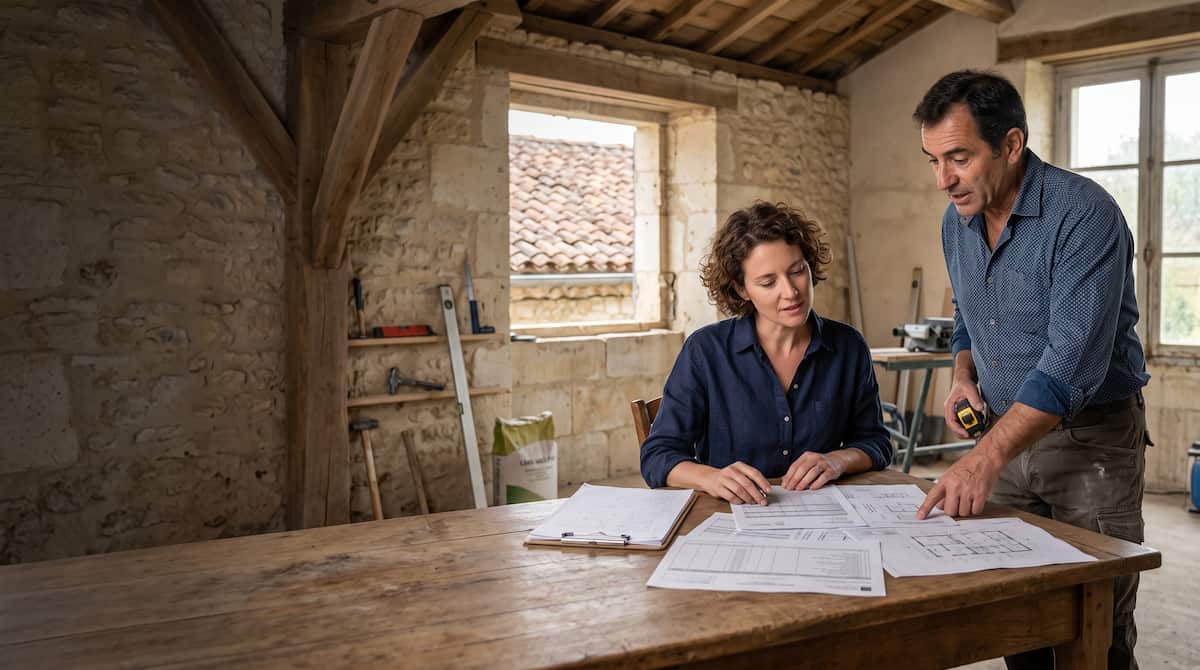
Renovation projects often involve details that are difficult to explain when you're working in a second language.
You may need to specify:
- the finish you want
- the materials to be used
- areas that must remain untouched
- the preferred layout
- insulation requirements
- particular aesthetic details
- what is included or excluded
- the standard of finishing expected
Being able to discuss these points clearly can reduce misunderstandings before work begins.
For larger projects, it is still sensible to confirm important decisions in writing, even when you and the artisan communicate easily in English.
2. Easier Understanding of the French Devis
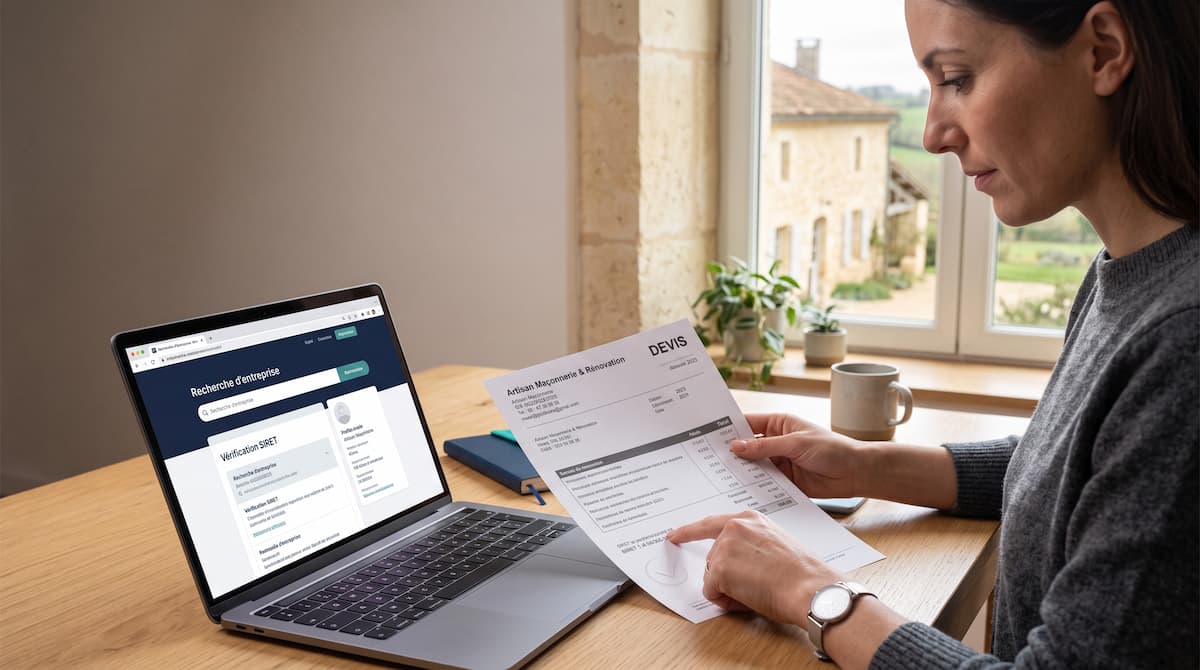
The devis is one of the most important documents in a renovation project.
A good quote should allow you to understand what work is proposed, what materials and labour are included, the applicable TVA, payment terms, timing and other relevant conditions.
An English-speaking artisan may be able to explain the French terminology and walk you through the quote before you accept it.
You should still read the French document itself and make sure that the written terms accurately reflect what you have agreed.
Never rely solely on a verbal conversation when committing to substantial building work.
For more information, see our guide to Understanding a French Devis.
3. Remote Project Management
If you live in the UK, Belgium, the Netherlands or elsewhere outside France, travelling to your property every time an issue arises may not be practical.
Technology can make remote supervision considerably easier.
Depending on the project and the artisan, you may be able to use:
- WhatsApp video calls
- photographs of completed stages
- short video walkthroughs
- shared documents
- email updates
- digital copies of quotes and invoices
- scheduled progress calls
For example, an artisan could send photographs after removing damaged roofing materials, allowing you to see the underlying structure before deciding whether additional work should proceed.
This doesn't replace visiting the property or having appropriate professional oversight on complex projects, but it can make communication much easier when you cannot be there every day.
4. Understanding French Building Terminology
Even when you have an English-speaking artisan, some French terminology will still appear on quotes, invoices and official documents.
A few examples include:
| French term | Meaning |
|---|---|
| Devis | Quote / estimate |
| Acompte | Deposit representing a firm contractual commitment |
| Arrhes | Deposit with different legal consequences |
| Main d'œuvre | Labour |
| Fournitures | Materials / supplies |
| Maçonnerie | Masonry |
| Charpente | Roof structure / timber framework |
| Couverture | Roofing |
| Étanchéité | Waterproofing / watertightness |
| Isolation | Insulation |
| Réception des travaux | Formal acceptance of the completed works |
| Garantie décennale | Ten-year statutory liability/insurance framework for qualifying construction work |
Understanding these terms can help you compare quotes and recognise what an artisan is referring to when discussing your property.
5. Carrying Out Basic Checks Before Hiring
Speaking English is useful, but it should never be your main method of deciding whether an artisan is suitable.
Before committing to substantial work, check the business itself.
Verify the business identity
Check the artisan's:
- legal business name
- address
- SIRET number
- current registration information
A SIRET check can confirm that you are dealing with an identifiable registered establishment, but it does not prove the quality of the workmanship or the contractor's insurance.
Read our guide to How to Check a French Artisan's SIRET Number.
Check appropriate insurance
For work where the contractor's statutory ten-year liability may apply, check the relevant Garantie Décennale insurance documentation.
Pay attention to whether the insurance corresponds to:
- the correct legal entity
- the relevant activities
- the policy period
- the work being proposed
Don't assume that a contractor having a Décennale certificate means every type of work they undertake is automatically covered.
Read our guide to Garantie Décennale in France.
Managing a Renovation When You Don't Live Locally
Remote property ownership creates some additional practical challenges.
You may not be able to:
- inspect work every day
- attend every site meeting
- collect several quotes in person
- immediately respond when unexpected problems are discovered
- communicate easily with every local contractor
This makes clarity and documentation particularly important.
Before work starts, establish:
Who is responsible for what?
If several trades are involved, establish who is coordinating the project.
How will progress be reported?
Agree whether you'll receive photographs, videos, written updates or scheduled calls.
How are unexpected costs handled?
Ask what happens if the artisan discovers rotten timber, damaged masonry, hidden leaks or another problem that wasn't visible when the quote was prepared.
How will additional work be approved?
Ideally, significant additional work should be clearly documented and agreed before it is undertaken.
Who has access to the property?
If you are abroad, establish who holds keys or access codes and who is authorised to enter the property.
These details may seem administrative, but they can prevent significant confusion later.
What If You Need Several Artisans?
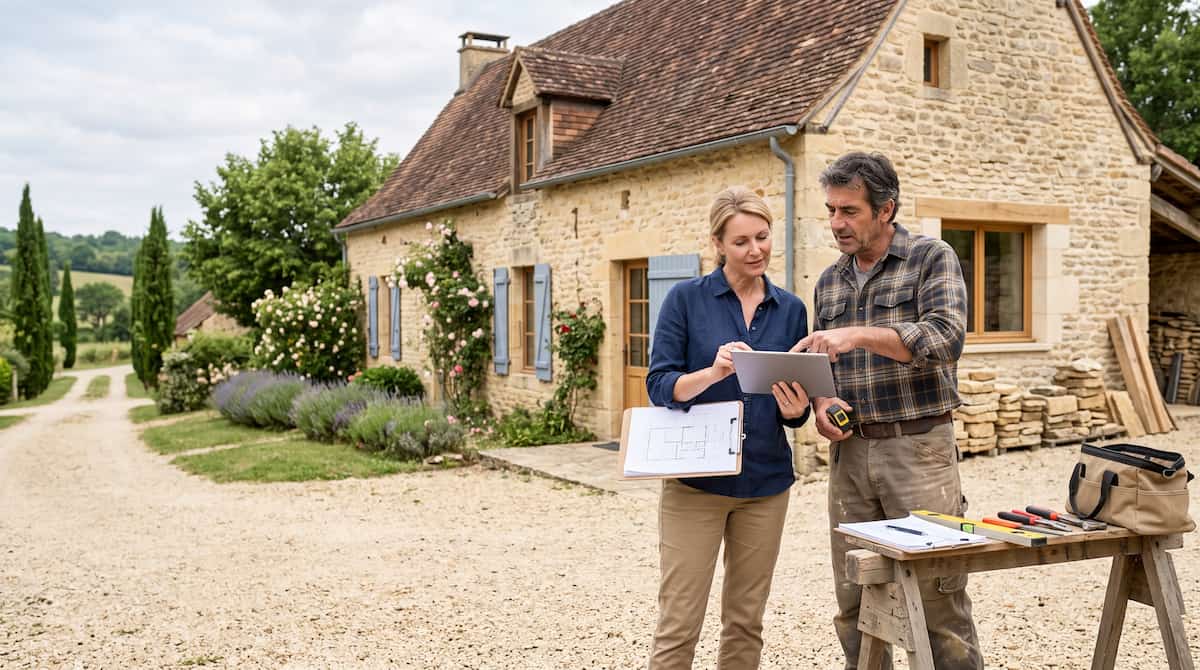
Traditional French properties often require several different trades.
A renovation might involve:
- Maçon : masonry and structural work
- Couvreur : roofing
- Charpentier : roof structures and timber
- Électricien : electrical installation
- Plombier : plumbing
- Chauffagiste : heating systems
- Artisan spécialisé dans la chaux : traditional lime work
- Peintre : painting and finishing
The challenge isn't simply finding each individual trade.
It is making sure that the different stages work together.
For example, roofing work may need to be completed before internal insulation or plastering can proceed. Electrical and plumbing installations may need to be coordinated before walls are closed.
If you are managing the project remotely, ask who is responsible for coordinating these dependencies.
Don't Choose an Artisan Solely Because They Speak English
This is an important distinction for international homeowners.
An English-speaking contractor who provides poor workmanship is still a poor contractor.
Similarly, an excellent French-speaking artisan may be perfectly suitable if you have a reliable way of communicating with them.
When comparing businesses, consider:
- Communication : Can they explain the proposed work clearly?
- Experience : Have they completed similar projects?
- Registration : Can their business identity be independently verified?
- Insurance : Do they have the appropriate insurance for the work being proposed?
- References : Can they provide examples of comparable work?
- Quote quality : Is the devis detailed enough to understand exactly what is included?
- Availability : Can they realistically take on your project within the required timeframe?
- Local knowledge : Do they understand the type of property, materials and planning environment involved?
English-speaking capability should be an advantage: not a substitute for due diligence.
English-Speaking Artisans in Dordogne, Lot-et-Garonne and Gironde
Southwest France has a large international property-owner community, particularly in areas such as:
- Dordogne
- Lot-et-Garonne
- Gironde
- Charente
- Charente-Maritime
- Lot
- Gers
- Landes
- Pyrénées-Atlantiques
- Tarn-et-Garonne
The availability of English-speaking tradespeople varies considerably by location and trade.
A business may also offer English communication even if its primary working language is French.
This is why a useful directory should do more than simply display an "English spoken" badge.
Homeowners need to know what the business actually offers, where it works, which services it provides and what information has been independently verified.
A Practical Checklist for International Property Owners
Before hiring an artisan for a significant project, consider checking:
- Business name and legal identity
- Active SIRET / registration information
- Appropriate insurance
- Experience with similar properties
- References or previous projects
- Detailed devis
- Materials and labour clearly identified
- Applicable TVA clearly shown
- Payment terms and any acompte
- Expected start date and duration
- Procedure for unexpected additional work
- Communication arrangements while you are abroad
- Who will coordinate different trades
- How progress will be documented
The more complicated the project, the more valuable this preparation becomes.
Finding the Right Artisan Through VeriLocal
VeriLocal is designed for homeowners who want more than a list of businesses.
Our goal is to make it easier to find local specialists based on location, service requirements and communication needs, while providing useful verification information to help homeowners make better-informed decisions.
For international property owners, that means being able to search for businesses that may offer English communication while also considering the practical information that matters when hiring in France.
You can describe what you need in English or French, identify the type of work involved and find businesses relevant to your location and project.
Verification is not a guarantee of workmanship. It is a way of giving homeowners better information before they make contact and request a quote.
The Bottom Line
Finding an English-speaking artisan can make owning and renovating a property in Southwest France considerably easier.
But the most important question isn't simply:
"Do they speak English?"
It is:
"Can I clearly understand who they are, what they are proposing, what it will cost, and whether they are appropriately insured for the work?"
Good communication, a detailed devis, independent business checks and appropriate insurance verification give you a much stronger foundation for a successful renovation, particularly when you are managing the project from another country.
Tell us what you need. We will find suitable local businesses.
Do not risk hiring unverified contractors. Describe your project once and receive matched introductions to up to 3 verified local businesses with checked SIRET registrations and active Décennale insurance.