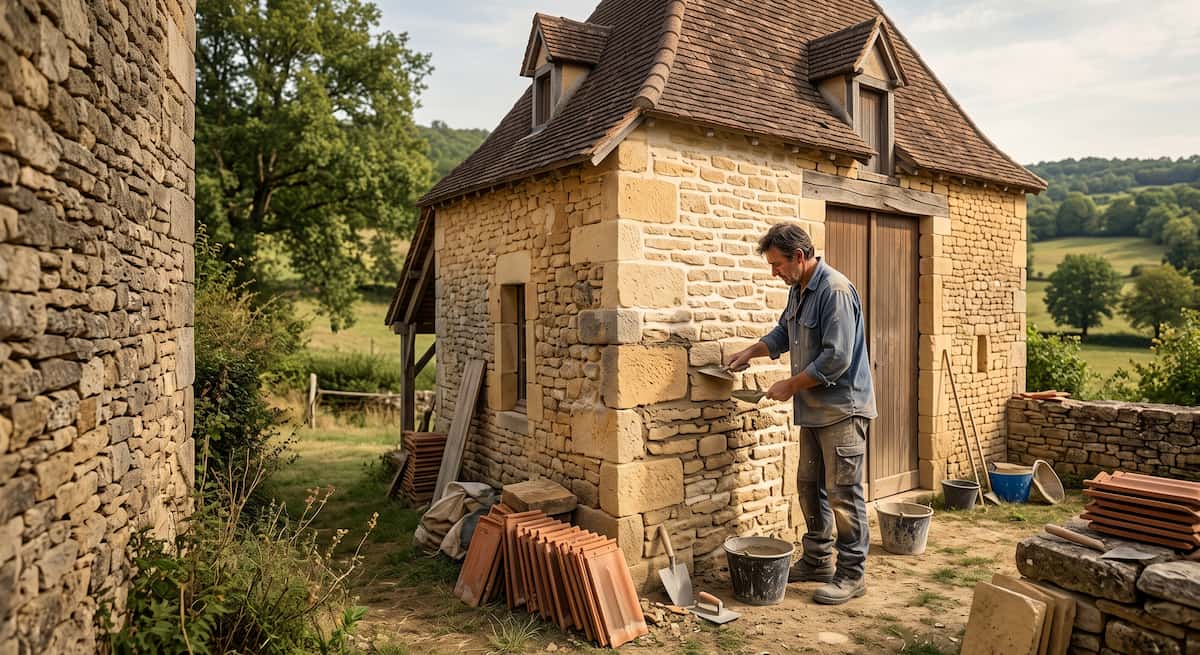

Dordogne (24) is renowned across the globe for its golden limestone villages, bastide market squares, and sprawling Périgourdine farmhouses. It also hosts France's largest and most vibrant community of international property owners. For British, Irish, American, and other English-speaking homeowners, finding trusted, clear-communicating tradespeople is often the single most critical factor in determining whether a French property dream becomes a triumph or a costly headache.
While language ease is invaluable, renovating in France is governed by a strict legal, technical, and regulatory framework. Hiring an English-speaking builder or artisan in Dordogne must never mean compromising on French statutory standards.
Here is what every property owner needs to know when looking for English-speaking tradespeople in the Dordogne.
1. Where Are English-Speaking Artisans Located in Dordogne?
Dordogne's geography spans four distinct "Périgords," and contractor availability varies noticeably between them:
- Périgord Pourpre (Bergerac, Eymet, Sigoulès, Lalinde): The epicentre of Anglo-French living in Southwest France. Here you will find an established ecosystem of fully bilingual French artisans, British-born registered builders, electricians, plumbers, and landscape contractors.
- Périgord Noir (Sarlat-la-Canéda, Domme, Belvès, Les Eyzies): A high-demand area with prestigious stone properties and holiday rental complexes. Tradespeople here often specialise in stone restoration, lime mortar, swimming pool installations, and gîte changeovers.
- Périgord Blanc & Ribéracois (Ribérac, Verteillac, Périgueux): Known for attractive rural hamlets and agricultural conversions. A strong concentration of independent artisans covers this region, frequently travelling across into neighbouring Charente (16).
- Périgord Vert (Nontron, Brantôme, Thiviers): The greener, rolling northern quarter. Trade teams here often cover broader distances between isolated hamlets.
2. The Golden Rule: French Law Applies to Everyone
Regardless of whether your builder grew up in Yorkshire, Dublin, or Périgueux, all construction work in France is governed strictly by the French Civil Code and French building standards.
Before awarding any contract, verify these three essential credentials:
A. The 14-Digit SIRET Number
Every legitimate business operating in France must be registered on the official commercial register (INPI / Infogreffe). A valid SIRET number proves that the artisan is paying French taxes and social charges.
- Read our step-by-step tutorial: How to Check a French Artisan's SIRET Number & Legal Status.
B. Garantie Décennale (10-Year Structural Defect Insurance)
Under Article 1792 of the French Civil Code, contractors carrying out structural, building envelope, roofing, or integral installation works must carry mandatory 10-year defect insurance.
- Overseas insurance policies are not valid: A UK public liability insurance policy provides zero legal protection in France.
- The policy must list the specific activities being performed on your property (e.g., maçonnerie, couverture, plomberie).
- See our detailed guide: Garantie Décennale in France: What Property Owners Must Check.
C. Formal Written Devis (Quote)
Never rely on an informal email estimate or verbal quote. Under French consumer law, work must be preceded by a formal devis containing statutory disclosures, insurance carrier details, and exact payment milestones.
- Learn what must be included: Understanding a French Devis: What Must Be Included by Law.
3. The Dangerous Trap: Unregistered Handymen & "Cash in Hand"
Because Dordogne has a large English-speaking population, it also experiences a recurring problem: unregistered "handymen" offering cheap rates for cash (au noir).
While having someone help with light garden clearance or flat-pack assembly can be benign, using unregistered individuals for renovation, plumbing, electrical, or roofing carries immense dangers:
- Zero Warranty or Insurance Protection: If a newly installed pipe leaks inside a stone wall, or if an unqualified person wires a fuseboard that causes an electrical fire, your household insurer will inspect the invoice. If the work was done by an uninsured or unregistered party, your insurance claim will be rejected.
- Resale Complications: When selling a property in France, the notaire requests invoices and attestations décennales for any structural, roof, electrical, or drainage works completed in the preceding 10 years. Without valid proof, you remain personally liable to the buyer for hidden defects.
- Severe Criminal Penalties: Engaging in undeclared work (travail dissimulé) is a criminal offence under French employment law, carrying fines of up to €45,000 for the homeowner.
4. Key Trades Needed for Dordogne Properties
Different types of Dordogne homes demand very different artisan skillsets:
Traditional Stone Farmhouses & Barns
Restoring Périgourdine properties requires artisans skilled in traditional lime mortar (chaux naturelle) rather than hard Portland cement, which traps moisture inside soft limestone walls.
- Discover essential restoration principles: Renovating a Traditional Stone Farmhouse in Dordogne: Costs, Materials & Artisan Guide.
Heating, Plumbing & Renewable Energy
With French energy regulations (RE2020) and high summer heat, many overseas owners are replacing inefficient oil boilers with air-to-water heat pumps (pompes à chaleur) and thermodynamic water heaters. Look for artisans with the RGE (Reconnu Garant de l'Environnement) accreditation to ensure high installation standards.
Electricians & Safety Standards (NF C 15-100)
French electrical installations differ fundamentally from UK ring mains and US split-phase panels. Installations must comply strictly with French standard NF C 15-100, requiring dedicated circuits, radial wiring, and independent earth rods.
5. How to Find & Work With English-Speaking Artisans in Dordogne
- Define Your Scope Clearly in Writing: Outline the rooms, materials, and expectations clearly before requesting site visits.
- Request at Least Two Detailed Devis: Compare line-by-line pricing, materials specifications, and payment stages.
- Inspect Active Local Chantiers (Sites): Reputable tradespeople in the Bergerac, Sarlat, or Ribérac regions are always pleased to share photos of past local projects or put you in touch with existing clients.
- Clarify Project Supervision: If you reside abroad during the works, establish clear weekly communication channels (photo updates, WhatsApp video calls) and consider engaging an independent maître d'œuvre (project manager) for complex multi-trade renovations.
Connect with Verified Dordogne Professionals
Whether you are restoring a village home in Eymet, renovating a country estate near Sarlat, or modernising a farmhouse outside Bergerac, start with verified local businesses:
Tell us what you need. We will find suitable local businesses.
Do not risk hiring unverified contractors. Describe your project once and receive matched introductions to up to 3 verified local businesses with checked SIRET registrations and active Décennale insurance.